


DECKER-CLAYTON
CLAYTON OLIVER "CLAY" DECKER
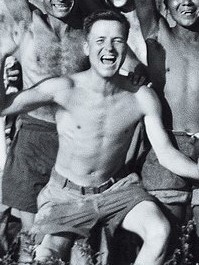

MOMM3 (SS)

THE DAY OF LIBERATION FROM
JAPANESE POW CAMP OMORI
AUGUST 29, 1945
Camp Omori was on a man made island in Tokyo Bay and housed nearly 600 POWs by the end of World War II. Near the end of the war rumors were rampant as most of the prisoners speculated that when Americans got close, the guards would gather them and gun them down. By the summer of 1945 there was little doubt the Americans were now very close because of the intensity of nearby air strikes. Treatment at the camp was horrific as all able-bodied prisoners were made to work at nearby docks and warehouses. Beatings, sickness, and barely edible food led to the death of many of Omori’s prisoners.
Suddenly, on August 15, 1945, things drastically changed after the Japanese emperor announced the war was ending. Work details suddenly ceased, many of the guards abandoned their posts, and those who were left passed out clothes, vitamins, toilet paper, and more food than the startled captives had seen before. When American ships began to appear in Tokyo Bay on August 29, 1945, the prisoners were delirious with excitement as it seemed their death sentence had been lifted.
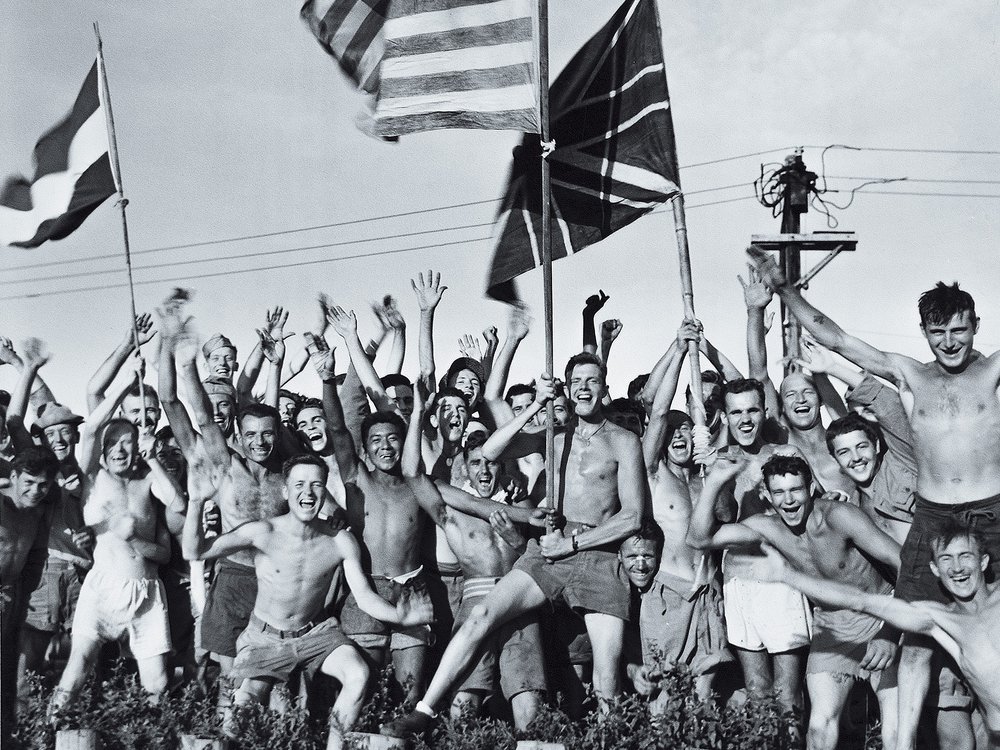
On August 29th the first American landing craft came close to Camp Omori as it was led by a torpedo bomber guiding it to the camp. As the landing craft approached, pandemonium broke out on the camp pier as prisoners rushed to the water’s edge. Approaching the pier, a Navy photographer snapped a picture and later wrote: “We finally spotted the moving figures on a pier jutting out to the bay. We came closer – they were screaming and yelling and waving their arms, their shirts, and an American flag. Some wore no clothing at all, some had G-strings, and others had on the remnants of what they were captured in, and a few had on new clothes that had been dropped by B-29s the last few days. Some started to swim for our boat and were told to go back. The others kept waving and shouting and we waved and shouted back, and tears came to my eyes.”
The photograph was widely published and historians have searched the famous photo to establish identities. Only thirteen have been named which includes eleven Americans (US Army Air Force-6; USN-4, USMC-1) one from Holland, and one from South Africa.
Motor Machinist Mate Third Class Clayton Oliver Decker was one of the delirious POWs. He was one of the eight survivors of the submarine USS Tang which sank October 25, 1944, in Taiwan Strait when it was struck by one of its own errant torpedoes, sinking it in 180 feet of water. Nine crew members on the bridge and conning tower managed to escape but only three survived to be rescued after many hours in the water. MOMM3 Decker was one of thirteen who managed to escape through the forward escape trunk using the Momsen Lung, an early underwater breathing device, but only eight reached the surface alive and only five survived to be picked up by the Japanese.
Submitted by CDR Roy A. Mosteller, USNR (Ret)