

JACKSON-WILMA
WILMA LEONA JACKSON
CAPT (NC)

BECAME POW ON THIRD DAY OF WORLD WAR II
World War II began at Guam on December 8, 1941(the island is located west of the International Date Line). At 8:27 AM a flight of Japanese planes attacked the U.S. military facilities on Guam. The U.S. Government had decided that in case of war it would not be possible or practical to defend Guam if it was attacked and thus there were meager U.S. forces on the island which consisted of only one minesweeper and about 540 personnel including a Marine contingent of 145 men. The Marines were equipped with only 170 World War I rifles, not enough for each man, and a small number of machine guns and no mortars or artillery. Thus, on December 10, two days after the war began, when Japanese forces estimated to number about 5,900 men invaded the island, the resistance to the invaders was fierce but short lived as the Japanese quickly overwhelmed the defending troops and the minesweeper was sunk. These defenders thus became the first group of American POWs to be captured by the Japanese during World War II.
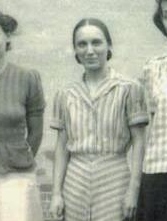
Ensign Wilma Leona Jackson was one of five Navy nurses assigned to the Guam medical facilities. The nurses remained calm during the Japanese attack, going about their regular duties. They later reported that there wasn’t time to huddle in a ditch even when the hospital was being machine gunned. On the third day of World War II the nurses watched as their country’s flag came down and they knew they were prisoners. For a month the nurses were allowed to remain in their quarters and continue their duties as if being a prisoner was an everyday occurrence. But, Japanese solders ate their food and wandered at will through the hospital and nurse quarters, picking up whatever struck their fancy.
After a period of confinement on Guam the five nurses were transported to Japan and housed at Zentsuji POW Camp in Osaka. Here they slept on straw mats and endured the freezing cold with nothing but an inadequate stove for heating. Their daily food ration was a small loaf of bread, rice and unpalatable soup. They were next moved to Kobe where they were housed in the Eastern Lodge which was described as a “fifth rate Westernized style hotel” which had been converted to hold POWs. Here the captives reportedly continued to consume an unappetizing “weed and water” soup and a rice-wheat mixture. While housed at Kobe the Japanese tried to persuade the women that there was no longer a U.S. military, but the women refused to believe them and were excited when they saw one of the Doolittle Raid planes with American markings fly over the city and heard bombs explode. As one nurse said, “The sight of that plane made us want to get out more than ever, to get back to our own Navy where we could do some good.”
In 1942, Ensign Jackson, along with the other four nurses captured on Guam, was repatriated in an exchange of United States/Canada nationals for Japanese/German nationals. The nurses boarded the ASAMA MARU in Yokohama on June 25, 1942. When the ship arrived in Mozambique the POWs were transferred to the MS GRIPSHOLM which took them to New York City where they arrived on August 24, 1942. It has been reported that this small group of five Navy Nurses were the only people captured on Guam to be repatriated and that all other military and civilian personnel remained prisoners of the Japanese until the war ended in 1945.
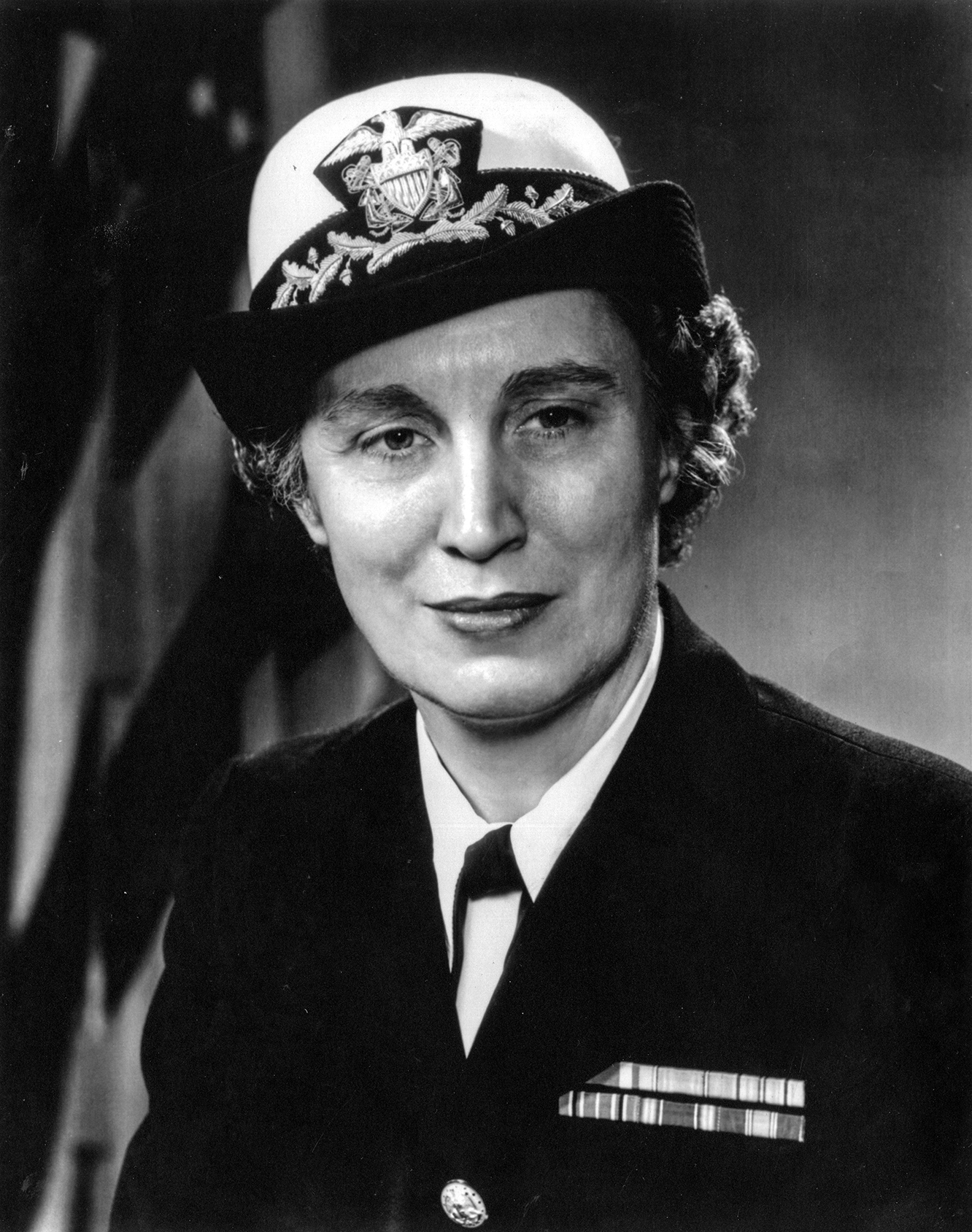
Wilma Leona Jackson was born on September 1, 1909, in Union, Ohio. In September 1930 she graduated from nurse’s training at Miami Valley Hospital in Dayton, Ohio. She reportedly became a Navy Nurse on July 6, 1936, and served first at naval hospitals in Philadelphia, Pennsylvania, and Brooklyn, New York, before being assigned in 1940 to the Naval Hospital in Guam. After being repatriated to the United States in 1942 she continued her work as a Navy Nurse, first being assigned to the Navy’s Bureau of Medicine and Surgery in Washington, D.C. In 1944 she was returned to Guam where she was assigned to Fleet Hospital #103 as the Senior Nurse. Following World War II her Navy service continued and included a tour during 1950-1952 at Columbia University in New York City where she earned BS and MA degrees in Nursing Administration. On May 1, 1954, she became the third Navy Nurse to be appointed Director, United States Navy Nurse Corps, a position she held until her retirement in 1958 with the rank of Captain. She died on March 23, 1998, at the Veteran’s Administration Medical Center in Dayton, Ohio, and is buried at Polk Grove Cemetery in Vandalia, Ohio, where her tombstone carries the inscription: CAPT – NAVY NURSE CORPS – WORLD WAR II – KOREA – PRISONER OF WAR.
Submitted by CDR Roy A. Mosteller, USNR (Ret)