


SNYDER-GEORGE
GEORGE WILLIAM SNYDER JR.
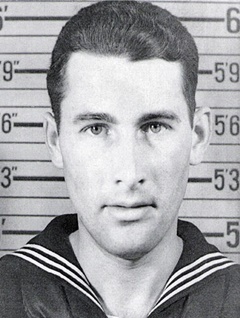

MM3 (SS)

DIED WHILE IN CAPTIVITY AS POW
Machinist Mate Third Class George William Snyder Jr. was a crewmember of the submarine USS Grenadier (SS-210). On April 22, 1943, the sub was on its sixth war patrol, patrolling in Lem Voalan Strait in the northeast Indian Ocean when it met its fate. On the night of April 20, having had poor hunting for several days, Grenadier ventured a short way out of her patrol area to see what could be found. She found two ships, but before an attack could be made, the ships turned away. Believing that they would probably come back to their original course it was decided to remain in the area to await their return. About 15 minutes before time to dive and prepare for an attack, a Japanese plane suddenly appeared, and the sub quickly dove. As she was passing 120 feet, a violent explosion shook the sub and she heeled over nearly twenty degrees, all lights went out and power was lost. Grenadier settled on the bottom at about 270 feet. The hull and hatches were leaking badly aft, and a fire in the control cubicle kept the ship without propulsion. A bucket brigade managed to put out the fire and later a jury rig pump was called into service keeping water from reaching the motors, while the electricians worked all day to restore propulsion. Several men were prostrated by heat and exertion, but the work continued.
Miraculously, thirteen hours later, Grenadier was able to get to the surface and work continued in an attempt to restore the sub to a working condition. It became possible to turn over the shaft very slowly, but despite what had been accomplished, adequate speed could not be expected. An attempt was made to jury-rig a makeshift sail to get the sub closer to a nearby island, but the attempt failed. As morning came, a merchantman was observed approaching the area and an escort vessel was seen on the horizon. Also, a plane came overhead but was driven away by gunfire although it reportedly dropped a bomb which exploded away from the stricken sub. As it was obvious that Grenadier was incapable of getting away from the area, the Commanding Officer decided to scuttle the ship. The 76 men aboard Grenadier soon found themselves in the water and all were taken prisoner by the enemy merchant ship.
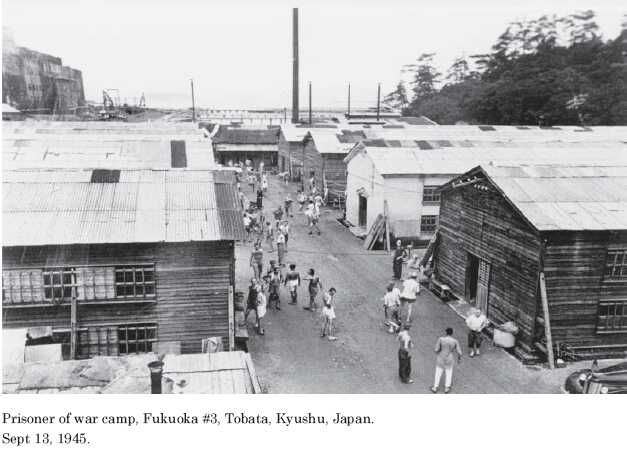
Some of the Grenadier crewmembers were made prisoners at Fukuoka #3 POW Camp in Japan. Following the end of the war the crewmembers related the brutal treatment they received at the hands of the Japanese, and of how their spirit was kept up by their Commanding Officer. They unanimously reported the Japanese gained no information from this gallant crew despite the starvation and torture for refusing to provide their captors with any information. During their confinement, four Grenadier crewmembers died while being held as POWs. Unfortunately, George William Snyder Jr. was one of the fatalities and reportedly died on September 23, 1944 due to enteritis and acute pneumonia.
The final disposition of Snyder’s remains is apparently the Easton Cemetery in Easton, Pennsylvania, as there is a grave marker here containing his name. Available historical records concerning Snyder are very scarce in addition to information about his service aboard Grenadier, his death in a Japanese POW camp, and that he was survived by his parents who were residing in Phillipsburg, New Jersey.
During her war patrols, Grenadier is credited with sinking six Japanese ships and damaging several others.
Submitted by CDR Roy A. Mosteller, USNR (Ret)