


STACEY-WILLIAM
WILLIAM C. "WILL" STACEY
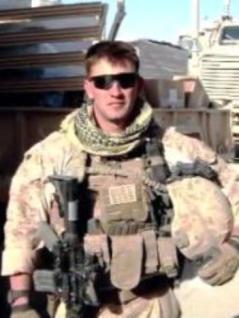

SGT

A MEANINGFUL LIFE
SGT William C. Stacey was no ordinary Marine. He was a bookworm, a leader and a patriot whom colleagues said had an “immeasurable impact” on his battalion. The son of two university professors, Stacey was killed in Helmand Province, Afghanistan, in January 2012 at age 23 when he stepped on an improvised explosive device. Stacey, a Seattle native, joined the Marine Corps in 2007 and went on five deployments in less than five years. He was a mortarman assigned to the 2nd Battalion, 4th Marine Regiment. It was during his fifth deployment that Stacey, serving as squad leader, demonstrated remarkable guile and calm under fire to lead his men to safety on two occasions. On November 26, 2011, with his men facing enemy machine-gun fire from three locations, Stacey ran 200 meters over exposed ground through a barrage of enemy fire to lead his group into tactically advantageous terrain. Then, on December 13, he led his men safely back to their patrol base after an hours-long firefight against superior enemy numbers.
For his heroic actions he was posthumously awarded the Bronze Star Medal as according to the citation he unquestionably saved the lives of his Marines. Stacey showed a vast interest in military history from a young age, his parents remembered. His father said his son insisted on becoming a Marine because it would be a challenging career and because he loved his country. William Stacey played varsity baseball at Roosevelt High School in Washington and later attended a community college in Northern California. But after just six weeks there, he dropped out to enlist in the Corps. “He loved teams,” his mother said, “The Marine Corps was the most important team he played for.”
“He provided a lifetime of service in less than five years,” said LTCOL Robert Weiler, commanding officer of the 2nd Battalion, 4th Marine Regiment. “Every Marine in this battalion knows of SGT Stacey.” Another battalion officer described Stacey as the jock who would be picked first in football games, and the nerd who devoured one book after another and he had “some serious swagger” “Courage is doing what the people who depend on you need you to do when they need you to do it, and that’s what he was doing in these combat actions,” Stacey’s father said. “Running 200 (meters) through enemy fire with no cover isn’t necessarily courage. It can be just craziness. It’s courage when that’s what the people who depend on you need you to do,” his mother added. “I think it was really remarkable for me to see the Marines celebrate the life of my son. I hope Will was looking down to see how much he mattered to the people he worked with and the people he led.” One of his superior officers added, “He turned Marines into brothers and platoons into families. He volunteered to return to the fray time and time again, because he was a warrior in the true sense of the word.”
A letter left behind by SGT Stacey for his family in the event of his death, has gained much attention:
"My death did not change the world. It may be tough for you to justify its meaning at all. But there is a greater meaning. Perhaps there is still injustice in the world. But there will be a child who will live because men left the security they enjoyed in their home country to come to his. And this child will learn in the new schools that have been built.... He will grow into a fine man who will pursue every opportunity his heart could desire….He will have the gift of freedom, which I have enjoyed for so long. If my life buys the safety of a child who will one day change the world, then I know that it was all worth it."
SGT Stacey has been buried at Arlington National Cemetery.
Submitted by CDR Roy A. Mosteller, USNR (Ret)