

STARKEY-RAYMOND
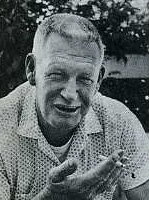
RAYMOND LEE STARKEY
TM2

AN AMBUSH GOES AWRY
Raymond Lee Starkey was born on February 2, 1914, in California. As a young man he worked on his father’s ranch in Los Angeles County and in 1940 was working for Miller Brothers Company, a business that ground chili peppers. Little has been recorded concerning his Navy career except for his service on Motor Torpedo Boat USS PT-109 to which he was assigned in mid-1943 as a replacement Torpedoman Second Class for a crewmember who had been injured in a previous engagement.
In Blackett Strait, south of Kolombangara in the Solomon Islands, the starless, moonless night of August 1-2, 1943, was profoundly dark, inky blackness. USS PT-109 stood at her station, one of fifteen PT boats that had set out to engage the well-known "Tokyo Express," the Japanese navy's supply convoy to soldiers fighting the advance of U.S. forces in the islands farther south. When the patrol came in contact with the Tokyo Express—three Japanese destroyers acting as transports with a fourth serving as escort—the encounter did not go well. Thirty torpedoes were fired without damaging the Japanese ships. Boats that had used up their complement of torpedoes were ordered home. The few that still had torpedoes remained in the strait for another try. What then transpired may well be the most famous small-craft engagement in U.S. naval history and surely the only time a vessel skippered by a future American President would be sunk in a collision with a Japanese ship.
PT-109 was one of the boats left behind. The boat’s commander, LTJG John Fitzgerald Kennedy, future U.S. President, rendezvoused his boat with two others. The three boats spread out to make a picket line across the strait. Unfortunately, none of the three PT boats was equipped with radar. At about 2:30 in the morning, a shape loomed out of the black darkness about three hundred yards off PT-109's starboard bow. Kennedy and his crew first saw the luminous wake and believed it was another PT boat. When it became apparent that it was a Japanese destroyer, Kennedy attempted to turn to starboard to bring his torpedoes to bear but there was not enough time. The Japanese destroyer, later identified as the AMAGIRI, had begun a 400-mile high speed run for Rabaul when a lookout spotted something small dead ahead. Correctly believing the unidentified boat to be an American PT boat the AMAGIRI’s commanding officer ordered the helmsman to speed directly toward the object. PT-109 was struck by AMAGIRI just forward of the forward starboard torpedo tube, ripping away the starboard aft side of the boat. Most of the crew were knocked into the water. The one man below decks miraculously escaped, although he was badly burned by exploding fuel. PT-109 had been sliced in half and the aft portion of the boat quickly sank. TM2 Starkey was on deck at the time of the collusion and was knocked into the water.
Although the bow portion of the boat was floating, the surrounding water was largely covered with burning fuel. Fear that what remained of PT-109 would go up in flames drove Kennedy to order the men who still remained on the wreck to abandon ship. When the fire began to subside, Kennedy sent his men back to what was left of the boat. Floating on and around the hulk, the crew took stock and discovered that two crewmembers had disappeared in the collision, very likely killed at impact. All the men were exhausted, several were injured and some had been sickened by the fuel fumes. There was no sign of other boats or ships in the area and the men were afraid to fire their flare gun for fear of attracting the attention of the Japanese who were on islands on all sides. Although the wreckage was still afloat, it was taking on water and it capsized on the morning of August 2. After a discussion of options, the men abandoned the remains of PT-109 which was slowly sinking and started swimming for an islet nearby.
When the survivors managed to reach an uninhabited islet about three miles from the sinking they found there was no drinking water and the only food was coconuts. LTJG Kennedy left the group several times to swim to nearby islets looking for assistance. With the help of friendly natives, word of their plight reached authorities and after several days of eluding the Japanese the PT-109 survivors were finally rescued.
Following World War II, TM2 Raymond Lee Starkey is known to have resided in Garden Grove, California, and was an oil field roustabout employee of Signal Oil Company in Huntington Beach. In 1960 he was chairman of “Citizens For Kennedy of Garden Grove” when Kennedy campaigned for the Presidency and was one of the former PT-109 crewmen who rode on the replica PT-109 float in the inaugural parade. Starkey died on October 8, 1970, in Westminster, California, survived by his wife, three children and four grandchildren.
Submitted by CDR Roy A. Mosteller, USNR (Ret)