


TERRY-ROBERT
ROBERT WAYNE "BOB" TERRY
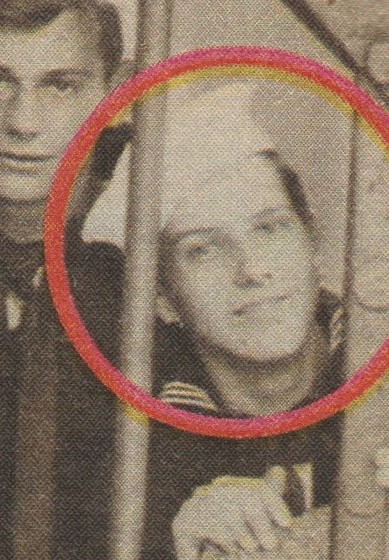

S2

Excerpts from article published in “AARP Magazine,” issue of April/May 2018:
NEVER FORGET
Bob Terry was next to me at our first roll call in Navy boot camp in 1945. He was 18 and we both came from the Midwest. Then we got assigned to the USS Indianapolis together. We became real close friends and promised each other that if one of us didn’t make it, the other would go and talk to the family.
When the first torpedo hit after midnight, I was sleeping topside – it was too hot below deck. The explosion threw me into the air. Luckily, I was flung onto a cable, or I would have been thrown into the water without a life jacket. The ship was listing heavily, the quarterdeck was on fire and there was a lot of shouting and explosions. Then the ship just slid away beneath us. I was floating around in a kapok life jacket for the next four days – no food, no water, a hundred degrees out. The second day Terry saw me. I don’t know how he recognized me – I was all covered in black diesel fuel, with my hair all matted down. I was glad to see him. We tried to hook our vests together so we wouldn’t float away, but it didn’t work because the swells just ripped the vests apart. So, we tried to keep floating near one another. Terry and me and two other guys. They were long days. You pass out, then come to, then pass out again. We were slowly dying, waking up less, the sun beating down. I felt sharks bump against me and once or twice I was looking right at one, maybe 16 inches away. But the diesel fuel masked me – I don’t think they cared for the smell.
On the fourth day, we spotted a raft that planes had dropped, and we decided to try to swim to it. Two of the guys died from the effort as in our condition their hearts gave out. Then Terry started to swim toward it. While I watched, I saw a shark take him, just 20 or 30 feet away. I was three-quarters out of my head, so close to death – my mind was coming and going. I thought, “It’s over.” Later, I somehow made it to that raft and there were four guys in it. I was too weak to pull myself in, so I tied myself to it. That night we were rescued, a little after midnight. Six months after I got out of the hospital, I went to see Terry’s mother and told her our story. I’m a lucky guy, but I think about Terry all the time, even 73 years later.
Author: Richard P. Thelen, S2, USN
NOTE: Of 1,196 crewmen, about 300 died immediately in the Indianapolis sinking. Of the almost 900 who survived the sinking, nearly 600 died over the next four days from dehydration, drowning and shark attacks as rescue operations were mounted too late to save most of the men. Robert Wayne Terry reportedly joined the Merchant Marine when he was 16-years of age and joined the Navy a year later. His body was never recovered, and his name is inscribed on the Tablets of the Missing at the American Cemetery and Memorial in Manila, Philippines.
Submitted by CDR Roy A. Mosteller, USNR (Ret)