

WOODSIDE-DARREL
DARREL D. WOODSIDE
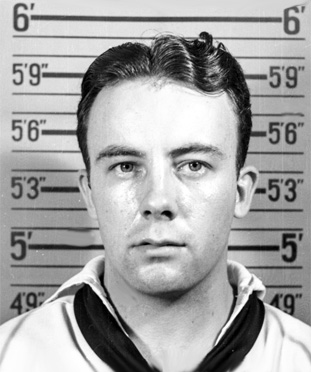
AMM1 (NAP)

NAVAL AVIATION PILOT
LOST AT SEA - BATTLE OF MIDWAY - 6/4/1942
On the early morning of June 4, 1942, Aviation Machinist Mate First Class Darrell D. Woodside was the pilot of a TBF-1 Grumman Avenger Torpedo Bomber which departed Midway Island in a flight of fifteen aircraft of Torpedo Squadron Eight, assigned the carrier USS Hornet, to attack the Japanese fleet that planned to attack Midway Island. The TBFs were without fighter protection as the fighters were flying at higher altitudes to protect the flights of dive bombers. Searching for the Japanese fleet, the TBF flight became separated from the other flights and when they sighted and began to attack the Japanese fleet, the flight was alone as they were met by a large swarm of Japanese fighters which systematically began withering fire destroying the attacking TBFs one by one as they crashed into the sea. Although facing an overwhelming number of Japanese fighters, the TBFs continued their attack and only one of the TBFs survived the devastating attack and was able to eventually return to safety. Unfortunately, AMM1 Woodside and his two crewmates were killed during the attack.
The Battle Of Midway lasted four days, four Japanese carriers were sunk, the Japanese were unable to ever recover from their devastating damage, and historians have called it “the most stunning and decisive blow in the history of naval warfare.” Following the battle, the Navy awarded the Distinguished Flying Cross to the enlisted naval aircrew members who died during the battle. When AMM1 Woodside’s mother became aware that all the aircraft pilots were awarded the Navy Cross she succeeded in encouraging the Navy to rescind his DFC award and he was awarded the Navy Cross in view of his pilot status as an enlisted Naval Aviation Pilot (NAP).
Darrel D. Woodside was born March 30, 1920, and following graduation in June 1937 from high school in Clearfield, Iowa, he falsified his birth date and enlisted in the Navy at Des Moines, Iowa, on June 28, 1937, at the age of 17. Following recruit training at Great Lakes he served aboard several ships and aircraft squadrons until April 1, 1941, when he reenlisted for six years. He then received training to become an enlisted NAP in 1938 at Pensacola. He was assigned to Torpedo Squadron Eight on December 4, 1941. As the remains of AMM1 Woodside were never recovered his name is inscribed in the Courts of the Missing at the National Memorial Cemetery of the Pacific in Honolulu, Hawaii. AMM1 Woodside was reportedly engaged to be married at the time of his death and he was survived by his parents residing in Clearfield, Iowa. His younger brother and younger sister both served in the Navy during World War II.
NAVY CROSS CITATION
The President of the United States of America takes pleasure in presenting the Navy Cross (Posthumously) to Aviation Machinist's Mate First Class Darrell D. Woodside, United States Navy, for extraordinary heroism in operations against the enemy while serving as Pilot of a carrier-based Navy Torpedo Plane of Torpedo Squadron EIGHT (VT-8), embarked from Naval Air Station Midway during the "Air Battle of Midway," against enemy Japanese forces on 4 and 5 June 1942. In the first attack against an enemy carrier of the Japanese invasion fleet, Aviation Machinist's Mate First Class Woodside pressed home his attack in the face of withering fire from enemy Japanese fighters and anti-aircraft forces. Because of events attendant upon the Battle of Midway, there can be no doubt that he gallantly gave up his life in the service of his country. His courage and utter disregard for his own personal safety were in keeping with the highest traditions of the United States Naval Service
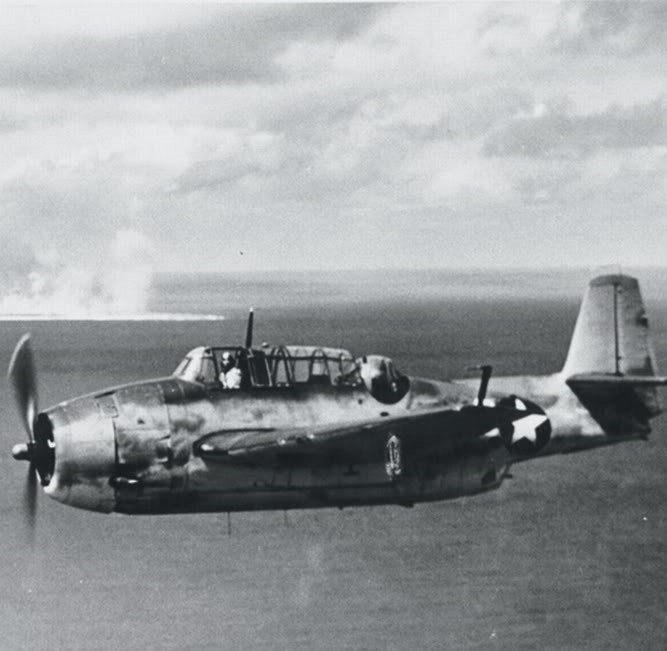
TBF-1 AVENGER IN FLIGHT
Submitted by CDR Roy A. Mosteller, USNR (Ret)